Collagen has become one of the biggest buzzwords in skincare. From collagen creams and supplements to microneedling, lasers and skin-tightening procedures, the beauty industry is full of promises about firmer and younger-looking skin. But collagen is not something you can simply replace overnight. Your skin naturally produces it, and that production changes with age and environmental damage. Some dermatology procedures can encourage the skin to make more collagen, but the results depend on the treatment, your skin and how consistently you protect it.
Collagen Is What Gives Skin Its Structure
Collagen is a major structural protein found in the skin. It helps provide strength, firmness and support. As we get older, collagen production naturally declines, which can contribute to fine lines, wrinkles and loss of firmness. Sun exposure can also damage collagen over time. This is why protecting your skin from ultraviolet radiation is one of the most important long-term steps for maintaining its appearance. The goal of most collagen-focused treatments is not to inject “new youth” into the skin. Instead, many procedures work by creating controlled stimulation that encourages the body’s natural repair processes.
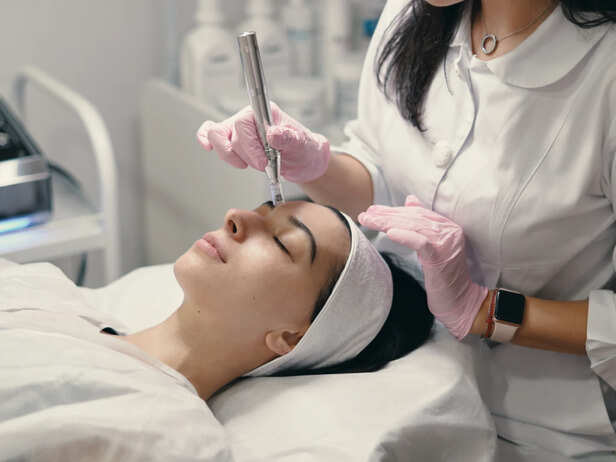
Microneedling Can Stimulate Collagen Production
![Microneedling Triggers Your Skin's Own Repair]()
Microneedling Triggers Your Skin's Own Repair
Image credit : FreePik
Tiny needles create controlled injuries that push the skin into healing mode. Collagen production rises gradually across sessions, not from a single treatment.
Microneedling is one of the better-known procedures used to encourage collagen formation. Tiny needles create controlled micro-injuries in the skin, triggering a healing response. As the skin repairs itself, collagen production can increase. Over a series of treatments, this may help improve certain types of acne scars, fine lines and uneven texture. The results are gradual rather than instant. Temporary redness, swelling or sensitivity can occur after treatment, so professional assessment and proper aftercare are important.
Radiofrequency Uses Heat to Target Deeper Skin
Radiofrequency treatments use energy to heat selected layers of tissue. The controlled heating can stimulate changes associated with collagen production and may improve the appearance of mild skin laxity. Radiofrequency microneedling combines this concept with tiny needles, delivering energy at controlled depths in the skin. These treatments have become popular for people who want firmer-looking skin without traditional surgery. However, results vary, and treatment settings need to be selected carefully for the individual.
Sunscreen May Be Your Most Important Collagen Habit
![Sunscreen Protects the Collagen You Already Have]()
Sunscreen Protects the Collagen You Already Have
Image credit : FreePik
UV exposure breaks down collagen faster than almost anything else. Daily sunscreen guards existing collagen better than any expensive treatment chasing new production.
It is easy to focus on expensive treatments while overlooking the simplest form of collagen protection: sunscreen. Ultraviolet exposure contributes to collagen breakdown and premature skin ageing. Regular use of broad-spectrum sunscreen can therefore help protect the collagen you already have. A good skincare routine does not need to contain ten products. Consistent sun protection, gentle cleansing and appropriate moisturising provide a foundation for healthier-looking skin.
Laser Treatments Can Encourage Skin Renewal
Certain laser treatments are designed to stimulate collagen while improving the appearance of damaged or uneven skin. Depending on the technology, lasers may target the surface of the skin or work deeper into the tissue. Laser resurfacing can be used for concerns such as fine lines, uneven texture and some acne scars. Different lasers have different purposes, so simply choosing a treatment because it is called a “collagen laser” is not enough. Your dermatologist should determine which technology is suitable for your skin type and concern.
Collagen Creams Have Limitations
You may see countless skincare products promising to “boost collagen.” But applying collagen directly to the skin is not the same as stimulating your body’s own collagen production. Collagen molecules are generally too large to penetrate deeply into the skin in their intact form. Moisturisers containing collagen may help the skin feel softer and more hydrated, but they should not be treated as a replacement for professional collagen-stimulating procedures. Some topical ingredients, particularly retinoids, have stronger evidence for supporting changes associated with collagen and skin ageing.
Collagen Supplements Are Not a Magic Fix
Collagen supplements are also popular, particularly in beauty and wellness circles. Some research suggests certain oral collagen peptides may modestly improve measures such as skin hydration and elasticity in some people. However, supplements are not a guaranteed way to reverse wrinkles or dramatically tighten skin. Your body breaks dietary collagen down during digestion, and the resulting amino acids and peptides are used throughout the body. Before taking supplements regularly, consider your overall diet, existing medications and individual health needs rather than treating collagen as a must-have beauty product.
More Aggressive Does Not Mean Better
The popularity of collagen treatments can make stronger procedures seem more effective. That is not always true. Overly aggressive treatments can cause burns, prolonged inflammation, pigmentation changes or scarring. This is particularly important for people who are prone to post-inflammatory pigmentation. A qualified dermatologist can assess your skin and recommend an appropriate intensity and treatment schedule. Your skin needs time to recover and remodel collagen between procedures.
Results Take Time
One of the biggest misconceptions about collagen treatments is expecting immediate results. Collagen remodelling takes time, which means improvements may become noticeable gradually over weeks or months. Some people may need several sessions, while others may benefit from maintenance treatments. Results also depend on factors such as age, sun exposure, skin condition and the specific procedure. Before treatment, ask what improvement is realistic rather than expecting a complete transformation.
Choose the Treatment Based on Your Skin
Collagen is important, but chasing it should not become another skincare obsession. If your concern is fine lines, mild laxity, acne scars or uneven texture, different procedures may be appropriate. A dermatologist can help identify the actual problem and decide whether a collagen-stimulating treatment makes sense. The best approach is not necessarily the newest or most expensive procedure. It is the one that matches your skin and your goals while keeping safety and realistic expectations in focus.
Discover expert advice and the latest updates in
Skin Care,
Hair Care,
Wellness,
Dermatology, and more at
Stay Young guide to lasting beauty and holistic health.