Most people scrape their tongue out of habit or because someone told them to, without knowing what they are removing. The coating on your tongue is a biofilm, a layered community of bacteria, dead epithelial cells, food debris, and proteins from saliva, that accumulates in the papillae, the small projections covering the tongue's surface. Understanding what it is changes how you approach it.
What the Coating Is Made Of
The tongue's dorsal surface is not smooth. It is covered in filiform papillae, fine, thread-like projections that create a textured surface ideal for trapping material. Bacteria colonise this surface continuously. The white or pale yellow appearance comes from the combination of desquamated epithelial cells (skin cells shed from the tongue's surface), oral bacteria, and mucin from saliva. In a healthy mouth, this layer is thin and nearly translucent. When it thickens and becomes visible, something has shifted, either in oral hygiene, salivary flow, diet, or the bacterial balance of the mouth.
What a Thick Coating Can Signal
A consistently thick or discoloured tongue coating is worth showing a dentist, not because it always indicates disease, but because it can reflect conditions that deserve attention. Dry mouth, which reduces saliva's natural cleansing action, allows the biofilm to build up faster. Certain medications, including antihistamines, antidepressants, and some blood pressure drugs, reduce salivary flow and can worsen coating. A heavily coated tongue can also be associated with candidiasis, a fungal overgrowth that appears as a white coating that does not scrape away cleanly and may leave a raw surface underneath. This is distinct from ordinary biofilm and requires clinical diagnosis and treatment; scraping it harder makes it worse. Black or brown discolouration, sometimes called black hairy tongue, results from elongated filiform papillae that trap pigment from tea, coffee, or certain antibiotics. It looks alarming and is usually benign, but it still warrants a dental review to confirm the cause.
What Tongue Cleaning Actually Does
Tongue scraping mechanically reduces the bacterial load on the dorsal surface. The relevant clinical finding is that volatile sulphur compounds, the main chemical contributors to halitosis, are produced in large part by anaerobic bacteria living in the back portion of the tongue. Removing the substrate they live in reduces their output. A toothbrush reaches the tongue surface but is less effective at clearing the biofilm from between papillae than a scraper, because the bristles tend to push material rather than collect it. A dedicated tongue scraper, a flat, curved implement drawn from back to front, removes more material in fewer passes. Two to three passes is sufficient. Pressing harder or repeating more than four or five times does not improve the result and can irritate the mucosa. The back third of the tongue is where the highest bacterial concentration sits, which is also where most people trigger their gag reflex. Start as far back as you can comfortably manage and work forward.
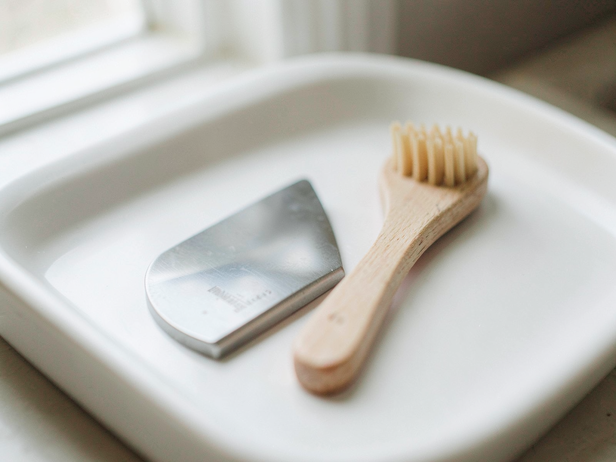
![Minimalist Oral Care Tools]()
Minimalist Oral Care Tools
Image credit : AI
My tools for a clean tongue, exploring tongue coating causes and benefits.
When Cleaning Is Not Enough
Tongue cleaning addresses the surface. It does not address the conditions that cause the biofilm to thicken in the first place. If the coating returns heavily within a few hours of cleaning, or if it is accompanied by a sore tongue, burning sensation, altered taste, or patches that look different from ordinary coating, these are reasons to see a dentist rather than scrape more vigorously. Incorrectly self-treating certain oral conditions, particularly fungal infections, by treating them as ordinary biofilm can delay appropriate care and allow the condition to persist. A dentist can distinguish between a benign coating and one that requires swabbing, culture, or a prescription antifungal. Tongue cleaning is a useful daily habit for most adults. It is not a substitute for clinical assessment when something has changed.
The coating on your tongue is a normal feature of a living oral environment, the question is always whether it is within the range that routine hygiene handles, or whether it is telling you something the scraper cannot fix.
Discover expert advice and the latest updates in
Skin Care,
Hair Care,
Wellness,
Dermatology, and more at
Stay Young guide to lasting beauty and holistic health!