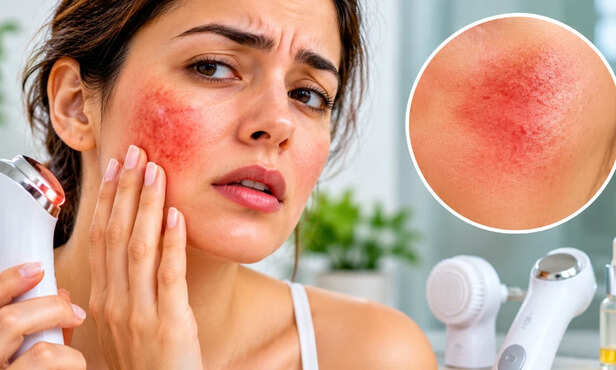
Energy-based cosmetic devices work by delivering controlled injury to a target tissue, a hair follicle, a pigmented lesion, a collagen layer, while leaving surrounding skin unharmed. When the settings are wrong, the injury is no longer controlled, and the surrounding skin takes the damage instead.
Why Burns Happen: The Physics in Plain Terms
![Facial Irritation After Beauty Treatment]()
Facial Irritation After Beauty Treatment
Cosmetic devices use different energy types, intense pulsed light (IPL), radiofrequency (RF), near-infrared, or specific laser wavelengths, but the burn mechanism is the same in each case: heat delivered faster than tissue can dissipate it. The relevant variables are fluence (energy per unit area, measured in joules per square centimetre), pulse duration (how long the energy is delivered), and spot size (how wide the beam is). A higher fluence with a shorter pulse duration concentrates heat more aggressively. If the skin cannot cool between pulses, the temperature at the surface exceeds what the tissue can survive.
Melanin is the complicating factor. It absorbs light energy. A device calibrated for a fair-skinned person will deposit significantly more heat in the skin of someone with more melanin, not because the device behaves differently, but because there is more absorbing material in the way. This is why Fitzpatrick skin types IV through VI carry a higher burn risk with IPL and certain laser wavelengths, and why devices that use these technologies require skin-type assessment before any session begins.
At-Home Devices: Where the Risk Compounds
Consumer IPL and RF devices are sold with safety features that restrict the maximum fluence available. This makes them less effective than clinical-grade equipment, but it also means a first-time user cannot accidentally set the energy high enough to cause the injuries seen in a clinic. The burn risk at home comes from a different source: repeated use on the same area in a single session, skipping the patch test, using the device over a tan, or treating an area that has recently had a topical retinoid applied.
Tanned skin, whether from sun, a booth, or a self-tanner, temporarily raises the melanin concentration at the surface. A setting that was appropriate two weeks ago may cause a superficial burn on the same skin today. Most device manuals state this. Most users do not read them past the quick-start guide.
RF devices that deliver energy through the skin's surface rather than via light are less sensitive to melanin and carry a lower risk of pigmentation-related burns. They carry their own risk: contact burns from a stationary handpiece, or deeper tissue injury if the device is held in one spot rather than moved in the prescribed pattern.
In-Clinic Settings: What a Trained Operator Should Do
A qualified operator performs a Fitzpatrick skin type assessment before selecting settings. They should also ask about recent sun exposure, isotretinoin use (which sensitises skin to heat), active skin conditions over the treatment area, and any photosensitising medications. These are not optional courtesies, they directly determine the safe fluence range.
A patch test on a small, inconspicuous area 24 to 48 hours before a full treatment is standard practice for new clients and for clients whose skin has changed since the last session. If a clinic skips this step, it is worth asking why.
Cooling matters as much as the energy setting. Most clinical devices use a built-in contact cooling tip, a cryogen spray, or a cold air unit to protect the epidermis while the energy reaches the target tissue below. If the cooling system is not functioning correctly, the safe fluence range drops. An operator who continues treatment when the cooling feels inconsistent is taking a risk with your skin, not theirs.
What a Burn From a Cosmetic Device Looks Like, and What to Do
Superficial burns from cosmetic devices appear as redness, blistering, or a grey-white discolouration in the treated area, sometimes within minutes, sometimes hours later. Post-inflammatory hyperpigmentation, a darkening of the skin that can last months, is a common outcome of even minor thermal injury in skin types III through VI. In some cases, hypopigmentation (permanent lightening) occurs, particularly after aggressive laser treatment on darker skin tones.
If you notice blistering or significant pain after a device treatment, do not apply any active cosmetic ingredient to the area. Cool the skin with clean running water, cover it loosely, and see a dermatologist. Do not attempt to manage a burn from a cosmetic device with home remedies or wait it out; what looks like a minor surface issue can involve deeper tissue, and a dermatologist can assess the depth and advise on wound care and scar prevention.
The person best placed to assess what happened and adjust future treatment settings is a qualified dermatologist, not the clinic that performed the treatment, particularly if the burn occurred there.
Who Should Not Use Energy-Based Devices
Certain people face a meaningfully higher risk from energy-based cosmetic devices regardless of how carefully the settings are chosen. Active skin conditions over the intended treatment area, including eczema, psoriasis, or active acne, increase the likelihood of a poor outcome. People taking isotretinoin or photosensitising medications, those with a history of keloid scarring, and those who are pregnant should discuss the matter with a doctor before any device treatment. Darker skin tones are not a contraindication, but they require a practitioner with documented experience treating that skin type and access to devices with appropriate wavelength options, not every device is suitable for every skin tone, and a clinic that cannot explain why their equipment is appropriate for you is not the right clinic.
The device doing the work is less important than the person setting it. A correctly calibrated treatment on the right skin type, with functioning cooling and a properly conducted patch test, carries a low risk. The injuries that reach a dermatologist's clinic almost always trace back to one skipped step.
Discover expert advice and the latest updates in
Skin Care,
Hair Care,
Wellness,
Dermatology, and more at
Stay Young guide to lasting beauty and holistic health!