
How Does Skin Thickness Impacts Rhinoplasty Results, What People with Thick Skin Should Know
Suvangi sanjeevani pradhan | Jan 10, 2026, 13:25 IST

a girl undergoing through the process of rhinoplasty
Image credit : freepik
Rhinoplasty, commonly known as a nose job, is one of the most sought-after cosmetic surgeries done worldwide. While bone and cartilage reshaping is done in this procedure, skin thickness plays a crucial role in determining the final outcome. Understanding how skin thickness, especially thick nasal skin affects rhinoplasty results can help patients set realistic expectations.
Why Skin Thickness Actually Matters in Rhinoplasty

thick skin individuals are considering rhinoplasty for getting a perfect nose
Image credit : freepik
The skin acts as a covering over the newly shaped nose framework. Thin skin tends to drape closely over the bone, allowing fine details and sharp contours to show clearly. In contrast, thick skin is heavier and less elastic, which can soften or mask subtle refinements made during the surgery. This does not mean that rhinoplasty is ineffective for thick skinned patients, but the results may appear more gradual and less sharply defined.
Challenges of The Thick Skin
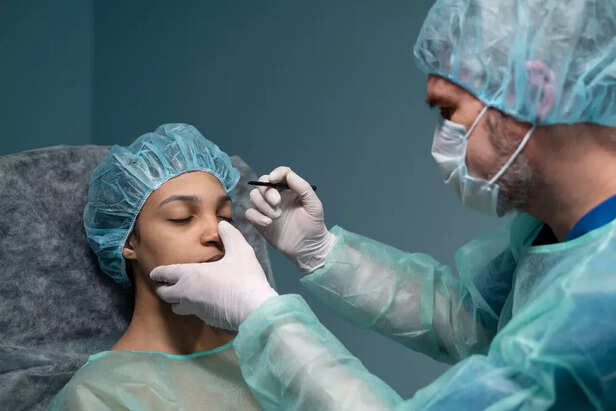
sometimes your nose can undergo sweeling during rhinoplasty
Image credit : freepik
Patients with thick nasal skin often face specific challenges after undergoing rhinoplasty. One of the most common issues is swelling. Thick skin retains fluid longer, this means that the nose can take more time, sometimes up to a year or more to fully settle into its final shape. Achieving a sharply defined nasal tip can be more difficult, as thick skin may obscure the underlying cartilage structure.
What Surgeons Do for Thick Skin
Experienced surgeons adapt their techniques while operating on patients with thick skin. This often involves building a stronger and more structured cartilage framework to support the heavier skin cover. Rather than focusing on reducing size, surgeons prioritize support and projection, especially in the tip of the nose.
What Patients with Thick Skin Should know

a concerned patient with her thick nose
Image credit : freepik
People with thick skin should approach rhinoplasty with patience and real expectations. Final results will evolve slowly, and changes may take longer to become visible. Post operative care is especially important like taping, steroid injections and regular follow ups can significantly improve outcomes.
Most importantly, choosing a surgeon experienced in thick skin rhinoplasty is the key. With the right surgical plan and proper aftercare, patients with thick skin can still achieve balanced and natural looking results that enhance facial harmony rather than relying on sharp definition alone.
Discover expert advice and the latest updates in Skin Care, Hair Care, Wellness, Dermatology, and more at Stay Young guide to lasting beauty and holistic health!
Frequently Asked Questions (FAQ's)
- how to reduce thick skin on nose naturally
we should focus on skincare like gentle cleansing and exfoliation and follow a hydrated diet to reduce thick skin - how to check if you have thick nose
if you have an oily nose, large pores, and fleshy nostrils then your nose is thick - is tip swelling of the nose normal in rhinoplasty
tip swelling is gradual in rhinoplasty, the tip especially with thicker skin retains swelling for up to a year as the final shape refines