
Is Air-Drying Really Better for Your Hair? The Truth
Noopur Kumari | Sept 24, 2026, 10:53 IST

Air-Drying vs Blow-Drying
Image credit : freepik
Air-drying sounds like the gentlest choice because it uses no heat. But there is a catch: keeping hair wet for a long time can also affect the hair fibre. On the other hand, excessive heat from a blow dryer can cause surface damage and breakage. So which habit is actually better for your hair? The answer depends on how you dry it, how long your hair stays wet, and how much heat you use.
You step out of the shower, wrap your hair in a towel and let it dry naturally. It feels like the healthiest possible choice. After all, there is no heat and no styling tool involved.
But there is a detail many people miss.
Wet hair is more vulnerable than dry hair, while excessive heat can damage the hair shaft. That means neither air-drying nor blow-drying is automatically better in every situation.
The real difference comes down to time, temperature and technique. Once you understand what happens to your hair while it is wet and what heat can do to it, choosing the right drying method becomes much easier.
![Woman gently drying wet hair after a shower]()
When hair becomes wet, it absorbs water and swells. This can make the hair fibre more vulnerable to stretching and mechanical damage. Research published in the International Journal of Trichology notes that repeated wetting and drying can affect hair structure over time.
That does not mean air-drying hair is harmful by itself. The bigger issue is what you do while your hair remains wet.
Brushing aggressively, rubbing it with a rough towel or tying it tightly while wet can increase hair breakage.
So natural drying can be gentle, but only when the hair is handled gently along the way.
![Long wet hair drying naturally indoors]()
Air-drying avoids direct heat, which is one clear advantage. But letting thick or long hair remain wet for hours is not necessarily ideal either.
Hair that stays wet for a long time remains in a swollen state. Repeated swelling and drying can contribute to changes in the hair fibre. This is why the idea that air-drying hair is always healthier is too simple.
Imagine washing your hair before bed and leaving it damp until morning. Your hair may still be wet when you wake up, and the combination of moisture, friction and movement can make breakage more likely.
The goal is not simply to avoid heat. It is to dry hair without unnecessary stress.
A blow dryer is not automatically the enemy of hair health. The problem usually comes from excessive temperature, holding the dryer too close or concentrating heat on one section for too long.
Research on hair damage has found that increasing drying temperature can cause greater damage to the hair surface. However, controlled drying from a greater distance can reduce exposure to intense heat.
That creates an interesting twist: carefully blow-drying hair may be preferable to leaving hair wet for a very long time, particularly for people with thick or long hair.
The technique matters more than the label “natural” or “heated.”
The biggest blow-drying hair mistake is using the hottest setting because it makes the process faster.
High heat can damage the cuticle, the protective outer layer of the hair shaft. Repeated heat damage can leave hair rough, dry and more prone to breakage.
A better approach is simple: remove excess water first, use a lower or medium temperature and keep the dryer moving instead of focusing on one spot.
If your hair feels extremely hot while drying, the setting is probably too aggressive.
Fast drying is useful. Very hot drying is not the goal.
There is no single drying method that works perfectly for everyone. Fine hair may dry relatively quickly, while thick or long hair can stay damp much longer.
Curly and textured hair also needs careful handling because aggressive brushing and friction can disturb the hair pattern and contribute to hair breakage.
If your hair dries quickly and you can leave it loose, gentle air-drying may work well. If your hair stays soaked for several hours, controlled blow-drying may be more practical.
Your routine should also consider whether your hair is coloured, chemically treated, already dry or frequently exposed to styling tools.
Start by gently squeezing excess water from your hair instead of rubbing it aggressively. Use a soft towel or T-shirt to blot moisture, then allow your hair to partially air-dry.
If you use a blow dryer, choose a lower or medium setting, keep it moving and avoid holding it extremely close to the hair.
Do not brush soaking-wet hair roughly, and avoid tight hairstyles while it is still damp.
If you regularly use heat styling, a heat-protectant product can also help reduce damage.
The simplest routine is often the best: less friction, less extreme heat and less time spent soaking wet.
So, is air-drying hair healthier than blow-drying? Not automatically.
Air-drying eliminates heat exposure, but hair can remain wet for a long time. Blow-drying can shorten that wet period, but excessive temperature can cause heat damage.
The smarter approach is somewhere in between.
Remove excess water gently, let hair dry naturally for a while and use a blow dryer only when needed, keeping the temperature moderate and the airflow moving.
Your hair does not need a perfect routine. It needs a routine that avoids repeated stress.
Sometimes, healthier hair is not about doing more. It is simply about being gentler.
Discover expert advice and the latest updates in Skin Care, Hair Care, Wellness, Dermatology, and more at Stay Young guide to lasting beauty and holistic health!
But there is a detail many people miss.
Wet hair is more vulnerable than dry hair, while excessive heat can damage the hair shaft. That means neither air-drying nor blow-drying is automatically better in every situation.
The real difference comes down to time, temperature and technique. Once you understand what happens to your hair while it is wet and what heat can do to it, choosing the right drying method becomes much easier.
Wet Hair Needs More Care
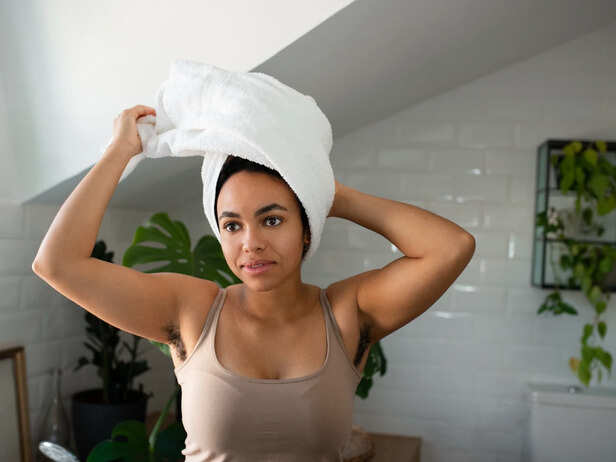
Woman gently drying wet hair after a shower
Image credit : freepik
When hair becomes wet, it absorbs water and swells. This can make the hair fibre more vulnerable to stretching and mechanical damage. Research published in the International Journal of Trichology notes that repeated wetting and drying can affect hair structure over time.
That does not mean air-drying hair is harmful by itself. The bigger issue is what you do while your hair remains wet.
Brushing aggressively, rubbing it with a rough towel or tying it tightly while wet can increase hair breakage.
So natural drying can be gentle, but only when the hair is handled gently along the way.
Air-Drying Has One Catch

Long wet hair drying naturally indoors
Image credit : freepik
Air-drying avoids direct heat, which is one clear advantage. But letting thick or long hair remain wet for hours is not necessarily ideal either.
Hair that stays wet for a long time remains in a swollen state. Repeated swelling and drying can contribute to changes in the hair fibre. This is why the idea that air-drying hair is always healthier is too simple.
Imagine washing your hair before bed and leaving it damp until morning. Your hair may still be wet when you wake up, and the combination of moisture, friction and movement can make breakage more likely.
The goal is not simply to avoid heat. It is to dry hair without unnecessary stress.
Blow-Drying Can Be Safer Than You Think
Research on hair damage has found that increasing drying temperature can cause greater damage to the hair surface. However, controlled drying from a greater distance can reduce exposure to intense heat.
That creates an interesting twist: carefully blow-drying hair may be preferable to leaving hair wet for a very long time, particularly for people with thick or long hair.
The technique matters more than the label “natural” or “heated.”
The Real Problem Is Extreme Heat
High heat can damage the cuticle, the protective outer layer of the hair shaft. Repeated heat damage can leave hair rough, dry and more prone to breakage.
A better approach is simple: remove excess water first, use a lower or medium temperature and keep the dryer moving instead of focusing on one spot.
If your hair feels extremely hot while drying, the setting is probably too aggressive.
Fast drying is useful. Very hot drying is not the goal.
Your Hair Type Changes the Answer
Curly and textured hair also needs careful handling because aggressive brushing and friction can disturb the hair pattern and contribute to hair breakage.
If your hair dries quickly and you can leave it loose, gentle air-drying may work well. If your hair stays soaked for several hours, controlled blow-drying may be more practical.
Your routine should also consider whether your hair is coloured, chemically treated, already dry or frequently exposed to styling tools.
A Better Way to Dry Hair
If you use a blow dryer, choose a lower or medium setting, keep it moving and avoid holding it extremely close to the hair.
Do not brush soaking-wet hair roughly, and avoid tight hairstyles while it is still damp.
If you regularly use heat styling, a heat-protectant product can also help reduce damage.
The simplest routine is often the best: less friction, less extreme heat and less time spent soaking wet.
The Healthiest Choice Is Balance
Air-drying eliminates heat exposure, but hair can remain wet for a long time. Blow-drying can shorten that wet period, but excessive temperature can cause heat damage.
The smarter approach is somewhere in between.
Remove excess water gently, let hair dry naturally for a while and use a blow dryer only when needed, keeping the temperature moderate and the airflow moving.
Your hair does not need a perfect routine. It needs a routine that avoids repeated stress.
Sometimes, healthier hair is not about doing more. It is simply about being gentler.
Discover expert advice and the latest updates in Skin Care, Hair Care, Wellness, Dermatology, and more at Stay Young guide to lasting beauty and holistic health!