Indian kitchens have always held foods that function differently from what they look like on the plate. Ghee is not just clarified fat. Curd is not just soured milk. Fermented batters and drinks carry microbial activity that changes what the body can extract from them. Understanding what each one does at the level of digestion and metabolism gives you a more honest picture than either the ancestral-wisdom framing or the superfood marketing that has replaced it.
What Ghee Actually Does in the Body
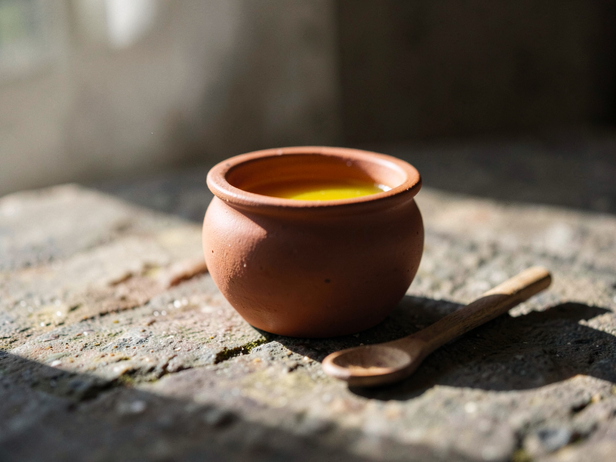
Ghee is almost entirely fat, roughly 99 to 99.5 percent, with the remainder being trace fat-soluble vitamins, primarily A, D, E, and K2. The fat composition matters more than the total fat content. Ghee is high in saturated fat, predominantly palmitic and stearic acids, with a meaningful fraction of short-chain fatty acids, particularly butyrate.
Butyrate is what makes ghee nutritionally interesting beyond its cooking properties. It is the same short-chain fatty acid that the gut's own bacteria produce when they ferment dietary fibre, and it serves as the primary fuel source for colonocytes, the cells lining the large intestine. Whether dietary butyrate from ghee reaches the colon in meaningful quantities or is absorbed earlier in the small intestine is a question the research has not settled cleanly. What is established is that butyrate, wherever it acts, plays a role in maintaining the gut lining's integrity.
The concern with ghee has always been its saturated fat load and its effect on LDL cholesterol. The evidence here is genuinely mixed. Stearic acid, one of ghee's dominant saturated fats, is considered largely neutral in its effect on LDL. Palmitic acid raises it. The net effect depends on how much ghee is consumed and what it replaces in the diet. A teaspoon used to cook vegetables is a different metabolic event from three tablespoons added to dal. Quantity, not the food itself, is where the risk sits.
![Golden Ghee in Clay]()
Golden Ghee in Clay
Image credit : AI
I capture the pure essence of golden ghee, a staple with nutritional benefits, in this serene morning light.
Curd: The Fermentation Baseline
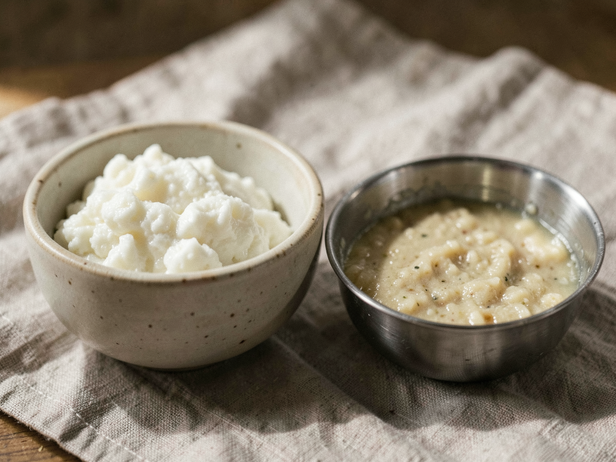
Traditional Indian curd made by fermenting full-fat milk with a live starter culture is a source of protein, calcium, phosphorus, riboflavin, and B12, and it delivers live Lactobacillus strains when it has not been heat-treated after fermentation. These strains are transient residents of the gut, meaning they do not permanently colonise it, but they interact with the existing microbiome and the gut's immune interface during their passage.
The calcium in curd is well absorbed. Fermentation reduces the phytate content that would otherwise bind to minerals and limit their availability, which means curd's calcium is more bioavailable than calcium from many plant sources. Protein content sits at roughly 3.5 grams per 100 grams for full-fat curd, lower than Greek yoghurt but higher than most plant-based alternatives in comparable serving sizes.
The probiotic benefit depends entirely on whether the curd contains live cultures at the point of eating. Curd that has been heated, stored for several days past its fermentation peak, or made from ultra-high-temperature milk may have significantly reduced live bacterial counts. Homemade curd set fresh and consumed within a day or two at room temperature or mild refrigeration retains the most activity. The gut benefit is real but conditional.
Fermented Foods Beyond Curd: Idli, Kanji, Koozh
The fermented batter used for idli and dosa is a two-organism system: Leuconostoc mesenteroides initiates the fermentation and Lactobacillus species continue it. The fermentation process does several things simultaneously. It reduces the phytate and tannin content of the rice and lentils, increasing the bioavailability of iron and zinc. It partially breaks down complex starches, which lowers the glycaemic response compared to the same ingredients cooked without fermentation. And it produces B vitamins, particularly folate, as a byproduct of microbial activity.
Kanji, the fermented rice water drink common in parts of Tamil Nadu, Odisha, and Kerala, is lower in protein but carries a similar probiotic profile and serves as a gentle source of resistant starch once the rice has cooled and fermented. Koozh, a fermented millet porridge, adds the nutritional density of millets, including higher fibre and magnesium content, to the benefits of fermentation.
These foods are not interchangeable with probiotic supplements. The strains, counts, and metabolic outputs differ. But as part of a regular diet, they contribute to microbial diversity in ways that isolated supplements do not replicate, because they arrive with the fibre and prebiotic material that feeds the bacteria alongside them.
![Curd and Idli Batter]()
Curd and Idli Batter
Image credit : AI
I showcase the probiotic benefits of Indian curd and fermented foods, essential for gut health.
Where the Evidence Runs Out
The claims that have attached themselves to these foods in wellness circles frequently outrun what is established. Ghee does not detoxify the liver. Curd does not cure irritable bowel syndrome, though it may reduce symptom severity in some people with IBS-D, and a doctor's guidance matters for that distinction. Fermented foods do not repair a damaged gut lining on their own.
The gut microbiome is not a simple system that responds predictably to one dietary addition. Individual microbiome composition, existing diet quality, antibiotic history, stress load, and sleep all influence how the body responds to any probiotic food. Someone eating a diet low in fibre and high in refined carbohydrates will see limited benefit from adding curd, because the bacteria arriving with the curd have little to work with.
These foods earn their place in a diet through their overall nutritional profile, not through any single mechanism. Ghee is a stable cooking fat with a high smoke point and a reasonable fatty acid profile in moderate quantities. Curd is a protein and calcium source with a probiotic dimension. Fermented batters improve mineral bioavailability and moderate glycaemic response. That is a meaningful contribution. It does not require the ancestral-miracle framing to be worth eating.
Discover expert advice and the latest updates in
Skin Care,
Hair Care,
Wellness,
Dermatology, and more at
Stay Young guide to lasting beauty and holistic health!