Steam inhalation works on a simple principle: warm, humidified air loosens secretions and soothes irritated mucous membranes. But the airway is not one continuous tube that steam travels through end to end. It has distinct anatomical zones, and what steam reaches, and what it cannot, determines when the remedy is useful and when it is not.
The Upper Airway Is Where Steam Does Its Work
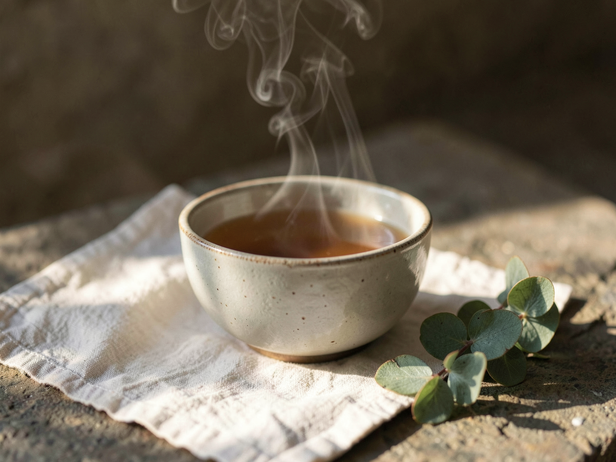
![Morning Steam Ritual]()
Morning Steam Ritual
Image credit : AI
Gentle steam rises from a bowl, offering comfort. Steam inhalation can help a blocked nose.
When you lean over a bowl of hot water and inhale, the steam enters through the nose and mouth and travels into the nasal cavity, the nasopharynx, and the throat. This is the upper respiratory tract, and it is where steam has its most defensible effect.
The nasal mucosa is lined with cells that produce mucus. When you have a cold or sinus congestion, that mucus thickens and the cilia, tiny hair-like structures that normally sweep debris upward, slow down. Warm, moist air raises local humidity, which temporarily reduces the viscosity of that mucus. Thinner secretions are easier to clear, either by blowing or by the cilia doing their job again.
The warmth also causes mild vasodilation in the nasal lining, which can briefly reduce the swollen feeling of a blocked nose. This is not a treatment for the underlying inflammation; it is a short-term shift in how congested the tissue feels.
The Lower Airway Has Its Own Rules
Below the larynx, the trachea branches into the bronchi and then into progressively smaller bronchioles. By the time inhaled air reaches these structures, it has already been warmed and humidified to near body temperature by the upper airway. Steam added at the nose has largely equilibrated before it gets this far.
This matters because people sometimes use steam inhalation hoping to ease chest tightness or a deep cough. For a cough rooted in the upper airway, post-nasal drip irritating the throat, for instance, steam can help indirectly by clearing the source. For a cough originating in the lower airways, such as in bronchitis or asthma, steam inhalation has little direct effect on the tissue causing the problem.
In people with asthma or reactive airways, inhaling steam can occasionally trigger bronchospasm. The airways narrow in response to the sudden change in temperature and humidity. This is not common, but it is a real reason why steam is not a universal remedy for any kind of breathing difficulty.
Temperature and Distance Change What You Inhale
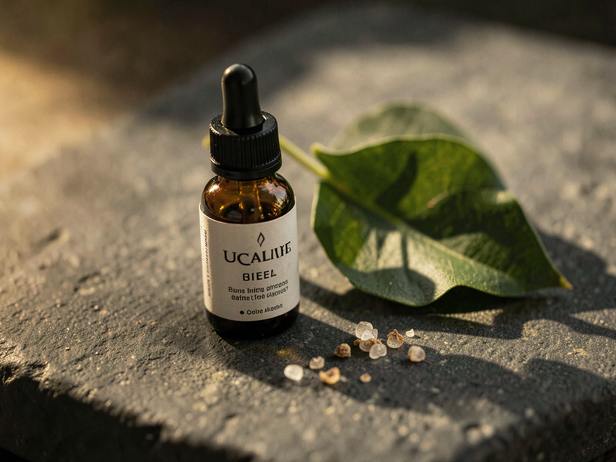
![Eucalyptus Menthol Aromatherapy]()
Eucalyptus Menthol Aromatherapy
Image credit : AI
Natural remedies for a blocked nose. Explore steam inhalation benefits with eucalyptus and menthol.
The steam that reaches your airway is not the same as the steam rising off the bowl. By the time vapour travels a few centimetres and enters the nasal passage, it has cooled and partly condensed. What you are actually inhaling is warm, humid air, not boiling steam.
This is relevant for two reasons. First, the therapeutic effect is from humidity and warmth, not from steam in its technical sense. A warm shower in a closed bathroom produces a similar environment. Second, the risk of a burn comes from leaning too close to the source, not from the vapour itself at a safe distance. Scalds from steam inhalation, particularly in children, are a documented clinical concern. Adults using a bowl and towel should keep their face at least 30 centimetres from the water surface and never use boiling water directly.
Adding Substances to the Water
Eucalyptus oil, menthol, and similar additives are common in Indian households and in many over-the-counter steam preparations. Menthol activates cold receptors in the nasal passage, creating a sensation of airflow that feels like clearer breathing even when the physical dimensions of the nasal passage have not changed. The perceived relief is real; the mechanism is sensory rather than structural.
Eucalyptus contains cineole, which has some evidence for mild anti-inflammatory and mucolytic properties in the upper airway at relevant concentrations. Whether the amount that reaches the mucosa during home steam inhalation is sufficient to produce this effect is genuinely uncertain. The sensation it produces is not nothing, but it should not be taken as evidence that the airway has been treated in a clinical sense.
Essential oils added to steam are not appropriate for young children. The compounds can irritate the airways of infants and toddlers, and some, including camphor, carry toxicity risks at low doses in small children.
When Steam Helps and When to Look Further
Steam inhalation is most useful for upper respiratory congestion from a cold or mild sinusitis, where the goal is temporary comfort and secretion clearance. It is a supportive measure, not a treatment. It does not shorten the duration of a viral infection, reduce fever, or address bacterial sinusitis.
If congestion is severe, one-sided, or accompanied by facial pain and pressure that persists beyond ten days, those are reasons to see a doctor rather than continue steaming. Similarly, any breathing difficulty that involves the chest, tightness, wheeze, shortness of breath, warrants a clinical assessment. Steam is not a substitute for that conversation, and in someone with reactive airways, it may make symptoms temporarily worse before they see anyone.
The remedy has a real place in managing the discomfort of a common cold. Its place is in the nose and throat, and that is where it should be expected to work.
Discover expert advice and the latest updates in
Skin Care,
Hair Care,
Wellness,
Dermatology, and more at
Stay Young guide to lasting beauty and holistic health!