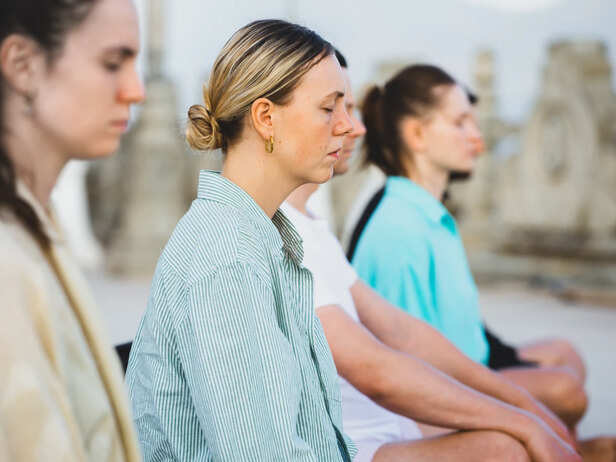
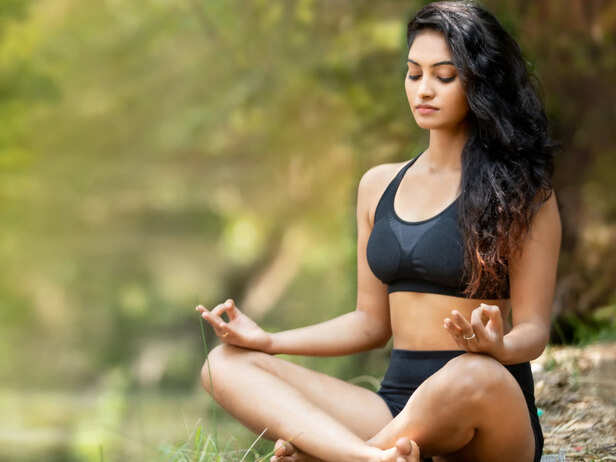
Most calming tools work by reducing the problem after the fact. Breathing works by interrupting the signal before it completes. That difference in mechanism is why a few slow exhales can shift your physiology faster than almost any other intervention you can do without equipment or a prescription.
The Nervous System Has a Back Door, and Your Breath Is the Key
![Breathing excercise]()
Breathing excercise
The autonomic nervous system runs on two modes: sympathetic, which accelerates the body for threat response, and parasympathetic, which slows it down for recovery. Almost everything in the body that switches between these modes does so automatically, outside conscious control. Heart rate, digestion, pupil dilation, you cannot will any of them directly. The diaphragm is the exception. It is a skeletal muscle, which means it obeys voluntary commands. And because it sits directly alongside the vagus nerve, the longest nerve in the body, running from the brainstem through the chest and into the abdomen, deliberate diaphragmatic movement sends signals straight into the parasympathetic system. A slow, extended exhale physically stimulates the vagus nerve. The nerve carries that signal upward to the brain, which reads it as a cue to downregulate. Heart rate drops. The stress-response cascade slows. This is not a metaphor for relaxation. It is a measurable shift in autonomic tone, and it can begin within two to three breath cycles.
Why the Exhale Matters More Than the Inhale
Breathing rate and heart rate are linked through a mechanism called respiratory sinus arrhythmia. When you inhale, your heart speeds up slightly. When you exhale, it slows. This is normal and healthy, a sign of a responsive nervous system. The practical consequence is that a longer exhale produces more parasympathetic effect than a longer inhale. Techniques that extend the exhale relative to the inhale, such as a four-count inhale followed by a six- or eight-count exhale, lean into this asymmetry deliberately. Box breathing, which equalises all four phases, works partly for the same reason: the exhale phase is long enough to produce a vagal signal, even if it matches the inhale. Hyperventilation does the opposite. Short, rapid breathing keeps the body in sympathetic dominance, which is why anxious breathing and anxious feeling reinforce each other in a loop that is hard to break through thought alone.
What Breathing Cannot Do
![Breathing excercise]()
Breathing excercise
Breathing exercises are acute tools. They are well-suited to interrupting a spike, a moment of panic before a presentation, a wave of irritability in traffic, the 3 a.m. spiral that starts with one anxious thought. They are not a treatment for chronic anxiety disorders, generalised anxiety, panic disorder, or any condition with a clinical diagnosis. Using slow breathing to manage a panic attack is reasonable and often helpful. Relying on it as a substitute for clinical care when panic attacks are frequent, severe, or worsening is a different matter. Chronic stress also has upstream causes, workload, sleep debt, relationship strain, financial pressure, that no breathing technique addresses. The breath can lower the cortisol response in the moment. It cannot change the conditions that keep triggering it. If anxiety is persistent, disruptive, or accompanied by physical symptoms that have not been assessed, a doctor or mental health professional is the right starting point, not a breathing app.
How to Actually Use It
The most reliable everyday technique is also the simplest: inhale for four counts, exhale for six to eight counts, through the nose if possible. Do this for two to five minutes. The counting matters less than the ratio, exhale longer than you inhale. Physiological sighing, which involves a double inhale through the nose followed by a long exhale through the mouth, has been studied as a particularly efficient acute reset because it deflates collapsed air sacs in the lungs, improving gas exchange and amplifying the vagal signal on the exhale. Cyclic sighing, where this pattern is repeated for five minutes, has shown measurable reductions in self-reported stress and resting respiratory rate in controlled settings. The Indian urban context adds one practical constraint: air quality on high-pollution days makes nose breathing uncomfortable for some people. On those days, mouth breathing through a slow exhale still produces the autonomic effect, even if it is not the textbook recommendation. The mechanism does not require perfect conditions, it requires a slower exhale than inhale, done deliberately rather than reactively.
Discover expert advice and the latest updates in
Skin Care,
Hair Care,
Wellness,
Dermatology, and more at
Stay Young guide to lasting beauty and holistic health!